Bouncy Castle Surfaces – Indoor Halls, Grass, Concrete, Astroturf and More
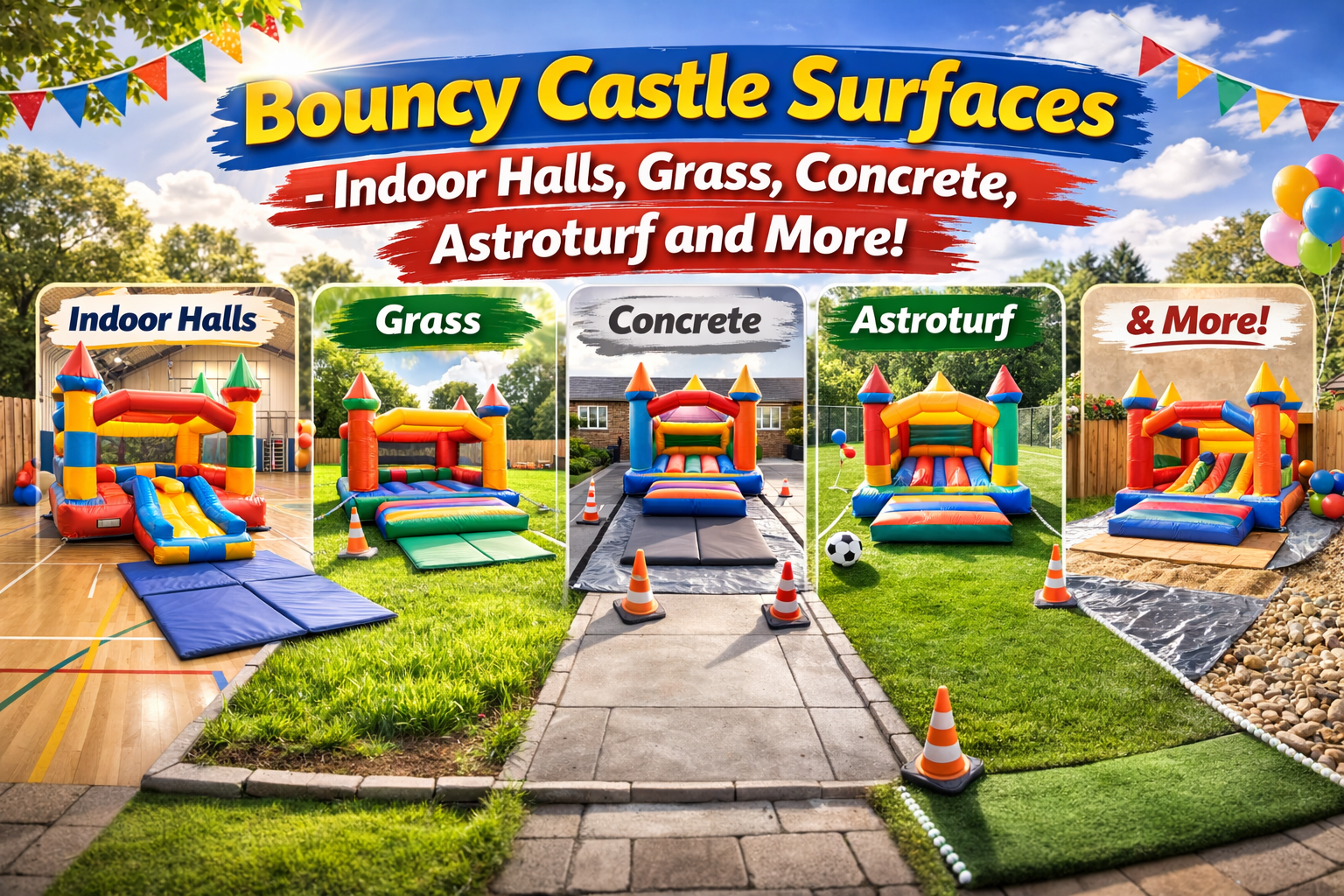
Choosing the right surface is one of the most important parts of planning bouncy castle hire.
Different surfaces affect how an inflatable is secured, how safe it is to use, and whether it can be set up at all.
This guide explains the most common surfaces we encounter, what works best for each, and what you should check before booking your inflatable.
Why the Surface Matters
Bouncy castles must be securely anchored and placed on a stable, suitable surface to be used safely.
The surface determines how anchoring is carried out and whether additional safety measures are required.
As a professional provider of Bouncy Castles and larger inflatables, we assess surfaces carefully on delivery and will not set up equipment if the surface is unsafe.
Indoor Hall Floors
Indoor halls are one of the most popular venues for bouncy castle hire, especially during colder months or when weather is unpredictable.
Typical indoor surfaces include sports hall flooring, wooden floors and vinyl or rubberised surfaces.
Indoor setups require:
- Sufficient ceiling height
- Clear wall space around the inflatable
- A flat, even floor
Anchoring indoors is carried out using weighted systems rather than ground stakes.
Inflatables from our Small & Medium Bouncy Castles range are particularly well suited to halls.
For more detail, see our Indoor Bouncy Castle Hire - What You Need to Know guide.
Grass Surfaces
Grass is the most common surface for outdoor bouncy castle hire and is usually ideal when conditions are good.
Grass allows for secure anchoring using metal stakes driven into the ground, providing excellent stability.
However, grass must be:
- Relatively flat
- Firm enough to hold stakes
- Free from slopes, holes or standing water
After heavy rain, grass can become waterlogged and unsuitable for safe anchoring.
This is one of the main reasons weather conditions are assessed carefully on the day of hire.
Concrete, Tarmac & Paving
Hard surfaces such as concrete, tarmac and paving can be suitable for bouncy castle hire, but they require additional considerations.
Because stakes cannot be used, inflatables must be secured using weighted anchoring systems.
These surfaces must be:
- Completely flat and level
- Free from sharp edges or loose slabs
- Large enough to allow safety clearance around the inflatable
Protective mats are always used to reduce slip risk and protect both the inflatable and the surface underneath.
Astroturf & Artificial Grass
Astroturf can sometimes be suitable, but it depends on how it has been installed.
Some artificial surfaces are laid over concrete, while others are installed over compacted ground.
Because anchoring options vary, astroturf surfaces must be assessed individually.
In some cases, weighted anchoring can be used, while in others the surface may not be suitable.
If you’re unsure about your astroturf installation, we recommend contacting us in advance so we can advise.
Unsuitable Surfaces
Some surfaces are not suitable for bouncy castle hire, including:
- Loose gravel or stones
- Uneven decking
- Steeply sloped ground
- Soft sand without appropriate stabilisation
These surfaces make safe anchoring difficult and increase the risk of movement or instability during use.
Surface Choice & Weather Conditions
Weather can change how a surface behaves.
Grass may become soft after rain, and hard surfaces can become slippery in wet conditions.
Our Adverse Weather Guidance for Bouncy Castle Hire explains how weather affects different surfaces and when it may be necessary to cancel or move indoors.
Measuring & Preparing Your Space
In addition to surface type, space and clearance are crucial.
You should allow room not only for the inflatable itself but also for safe access around it.
Our How to Measure a Garden for a Bouncy Castle guide explains how to check dimensions properly before booking.
Why Professional Assessment Matters
Surface suitability is one of the key reasons inflatable setup must be carried out by trained professionals.
Incorrect anchoring or poor surface choice significantly increases risk.
You can read more about this in our Why Only Professionals Can Set Up Bouncy Castles guide.
Local Knowledge & Delivery Areas
We regularly assess a wide range of surfaces throughout Coleraine, Ballymoney,
Limavady and Ballycastle.
Local knowledge helps us understand how different ground types behave in different areas, especially after wet weather.
Need Help Deciding If Your Surface Is Suitable?
If you’re unsure whether your surface is suitable for bouncy castle hire, it’s always best to ask before booking.
A quick conversation can help avoid disappointment on the day.
For advice specific to your venue, please contact us via our Contact Us page and we’ll be happy to help you plan safely.
Continue Your Venue and Booking Checks
The ground or flooring beneath an inflatable determines how it can be installed, but surface suitability should be considered alongside space, access, weather and the type of equipment being hired. The following guidance topics can help you complete those checks before choosing from our Bouncy Castles.
Moving from Surface Checks to Space Checks
Once you know whether the proposed setup area is grass, concrete, Astroturf or an indoor floor, measure the full usable space rather than relying on the inflatable dimensions alone. Our garden measurement guidance explains how to account for safety clearance, anchoring space, blower tubes, nearby walls and the route our team will use to bring the equipment into position.
This is particularly useful when comparing Small & Medium Bouncy Castles with larger equipment. A unit may fit within the main lawn or hall, but gates, narrow paths, steps, permanent seating and low ceilings can still affect whether it is practical for the venue.
Choosing Equipment for the Venue You Have
Our guide to choosing the right bouncy castle looks at age groups, capacity, themes and different styles of inflatable. Indoor venues often suit compact castles, toddler equipment and selected Bounce & Slide Bouncy Castles, provided the hall has enough floor space and overhead clearance.
For younger groups, Toddler Activity Zones offer a different style of play from a standard castle. Larger outdoor grounds may provide room for Obstacle Courses, Inflatable Games or attractions intended for school and public events. The equipment should always be selected around the confirmed surface and available operating area, rather than choosing a product first and hoping the site will accommodate it.
Outdoor Conditions Can Change the Setup
A suitable grass area can become unusable if it is waterlogged, excessively soft or affected by poor weather. Our adverse weather guidance explains how wind, rain and ground conditions can influence an outdoor booking. Customers arranging summer events can also browse Summer Party Hire, while indoor alternatives may be preferable when the forecast or venue conditions are uncertain.
The bouncy castle safety guide provides further information about supervision and correct use after installation. Our common pitfalls guide also covers issues such as failing to disclose the setup surface, measuring only the inflatable footprint or assuming equipment can be secured in the same way on every type of ground.
Guidance for Parties and Larger Events
Different event formats create different practical requirements. The stress-free children’s party planning guide is aimed at family celebrations, while the school fun day and community event guides consider larger attendance numbers, multiple activities, site layouts and organised supervision.
You can read FAQs for answers to regular hire questions and browse All Products once your venue checks are complete. Where there is any uncertainty about the ground, flooring, access or anchoring method, use Contact Us and describe the proposed setup area before booking.